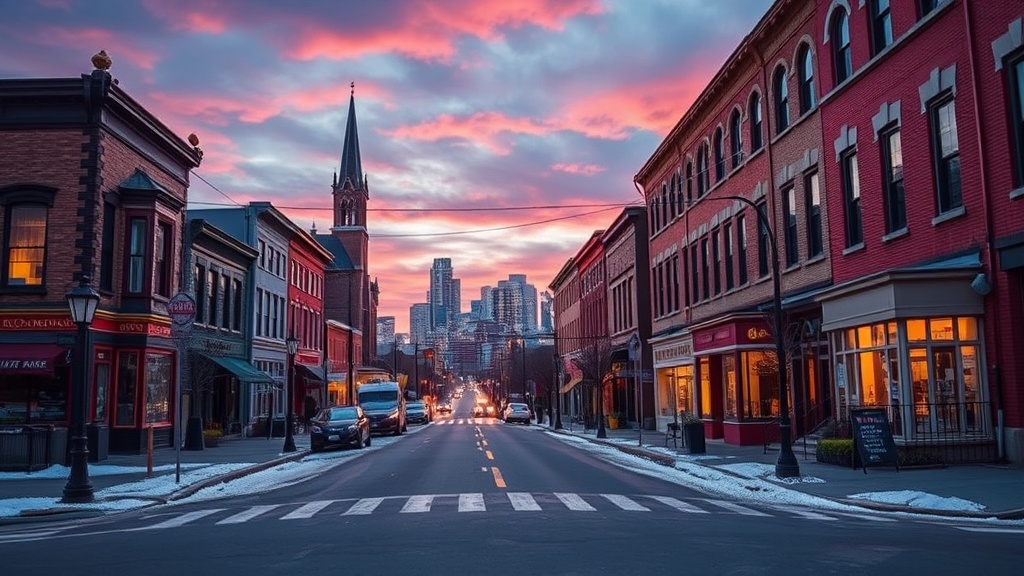
Exploring Vanier: A Local's Guide to Ottawa's Most Colorful Neighborhood

What Makes Vanier One of Ottawa's Most Unique Neighborhoods?
Vanier delivers the kind of authentic urban experience that's becoming rare in Canada's capital. This guide covers where to eat, what to see, how to get around, and why this francophone-heavy neighborhood deserves a spot on every Ottawa itinerary. Whether you're a curious visitor, a prospective resident, or a local looking to explore new corners of the city, Vanier offers character, history, and a community spirit that newer developments simply can't replicate.
Where Exactly Is Vanier Located?
Vanier sits just east of the Rideau River, directly across from Sandy Hill and the University of Ottawa. The neighborhood stretches from the river east to St. Laurent Boulevard, and from Montreal Road north to the Queensway (Highway 417). It's walkable, transit-connected, and—here's the thing—most visitors breeze right past it on their way to the ByWard Market.
The area became part of Ottawa in 2001 through amalgamation, though locals still treat it as distinct. (Old habits die hard—and in Vanier, that's a point of pride.) The neighborhood's street grid follows a logical pattern: numbered streets run north-south, while avenues and crescents snake through residential pockets. Navigation isn't difficult, but Google Maps occasionally gets confused by the one-way sections near Montreal Road.
For public transit users, OC Transpo serves Vanier well. Routes 5, 7, and 12 connect the neighborhood to downtown Ottawa in under 15 minutes during peak hours. The OC Transpo trip planner remains the most reliable way to check real-time schedules—especially handy during Ottawa's notoriously unpredictable winter weather.
Getting Around Without a Car
Vanier rewards pedestrians. The main commercial strip along Montreal Road packs restaurants, shops, and services into a walkable corridor. Sidewalks are generally well-maintained, though ice can linger in shaded spots during February thaws.
Cycling infrastructure has improved significantly. The City of Ottawa's cycling map shows dedicated lanes along Beechwood Avenue and shared paths connecting to the Rideau River Eastern Pathway. The catch? Montreal Road itself remains a challenging ride—narrow lanes, frequent stops, and drivers who haven't quite adjusted to the 40 km/h speed limit.
What Are the Best Restaurants and Cafes in Vanier?
The food scene punches well above its weight. Vanier's francophone roots—about 45% of residents speak French at home—shape the culinary landscape in ways you won't find elsewhere in Ottawa.
Breakfast and Brunch
Le Bistrot des Monts on Montreal Road serves the kind of hearty Québécois breakfast that gets you through a -25°C morning. The crêpes are properly thin, the coffee is strong, and the service doesn't rush you. (A rarity in brunch culture.) Their tourtière—available on weekends—comes from a family recipe that's been circulating Vanier kitchens since the 1970s.
For something lighter, Cafe Cristal offers solid espresso and pastries that rival anything on Elgin Street. The patio, small but sunny, fills quickly on summer mornings. Worth noting: they close at 3 PM sharp, so don't plan a late lunch.
Lunch and Dinner
Shawarma King—despite the generic name—makes the best shawarma plate in the neighborhood. The garlic sauce has actual bite, and the portions don't skimp on the meat. It's informal, cash-friendly, and consistently busy.
For date nights or family dinners, St. Martha's Brasserie on Donald Street occupies a converted church with surprisingly good acoustics. The menu changes seasonally, but the poutine—made with local St-Albert cheese curds—stays permanently. Prices run mid-range; expect $18-28 for mains.
Where to Grab a Drink
Le Troquet functions as Vanier's unofficial living room. The beer list emphasizes Quebec microbreweries—Dieu du Ciel!, Dunham, and Microbrasserie Nationale all make regular appearances. The crowd mixes retirees, young families, and public servants unwinding after work. Conversations spill between French and English without self-consciousness.
What Can You Actually Do in Vanier?
Entertainment options lean local and low-key. This isn't a nightlife district—it's a neighborhood where people live, shop, and gather.
Parks and Outdoor Space
Richelieu Park anchors the neighborhood's green space. The park features:
- A network of walking trails through urban forest
- Two tennis courts (free, first-come-first-served)
- An outdoor skating rink in winter (refrigerated, weather-independent)
- A community garden with 40+ plots
The Club de golf Vanier—yes, there's a golf course—offers a 9-hole executive layout that's affordable and rarely crowded. Green fees run $22-28, significantly less than municipal courses elsewhere in Ottawa.
Shopping and Services
Montreal Road functions as Vanier's commercial spine. The businesses here serve residents, not tourists—think hardware stores, independent pharmacies, and ethnic grocers rather than souvenir shops.
Marché Vanier (located in the mall at the corner of Montreal Road and St. Laurent) houses a dozen independent vendors. The butcher counter at Boucherie Séguin knows their cuts, and Fromagerie St-Albert maintains a small outlet with fresh curds daily. (Pro tip: call ahead for yogourt fromage blanc—it sells out by noon.)
Cultural Sites
The Vanier Museopark—housed in a converted sugar shack in Richelieu Park—documents the neighborhood's francophone history. Admission is by donation. The exhibits are modest but genuine, focusing on the families who built Vanier's working-class identity through the 20th century.
Each February, the Festival de l'hiver de Vanier transforms Richelieu Park into a winter carnival complete with ice sculptures, snowshoe races, and cabane à sucre food service. It's smaller than Ottawa's Winterlude, which means shorter lines and lower prices.
How Does Vanier Compare to Other Ottawa Neighborhoods?
Understanding Vanier means placing it in context. Here's how it stacks up against nearby areas:
| Factor | Vanier | Sandy Hill | New Edinburgh |
|---|---|---|---|
| Average rent (1BR) | $1,350-1,650 | $1,600-2,100 | $1,800-2,400 |
| Walk score | 78 | 85 | 72 |
| Francophone population | ~45% | ~15% | ~12% |
| Grocery access | Excellent (ethnic + mainstream) | Limited | Moderate |
| Transit frequency | Every 10-15 min (peak) | Every 5-10 min | Every 15-20 min |
| Architectural character | Mid-century bungalows, some infill | Victorian, student rentals | Heritage homes, expensive |
The pattern is clear: Vanier offers better value than its riverside neighbors, with stronger francophone culture and practical amenities. The trade-off? Less prestige, older housing stock, and a reputation that—while improving—still carries some stigma from decades past.
Is Vanier Safe?
This question comes up constantly—and deserves a direct answer. Vanier's crime rates exceed Ottawa's citywide averages, but context matters enormously.
Property crime (break-ins, vehicle theft) occurs at rates roughly 30% above the Ottawa norm. Violent crime, however, remains rare and typically involves people who know each other—not random street violence. The neighborhood has improved substantially since the 1990s, when Vanier genuinely struggled with drug activity and urban decay.
Practical safety tips for visitors:
- Lock vehicles and remove valuables—car break-ins are the most common issue
- Stick to well-lit streets after dark (Montreal Road, St. Joseph Boulevard, Beechwood)
- Trust your instincts around the industrial sections near Coventry Road
Thousands of families raise children here. Thousands of seniors live independently. The fear often exceeds the reality—though that doesn't mean ignoring basic precautions.
Who Actually Lives in Vanier?
The demographic mix surprises newcomers. Vanier houses:
- Third-generation francophone families whose grandparents worked in the nearby paper mills
- Recent immigrants—particularly from Somalia, Haiti, and Francophone Africa
- Young professionals priced out of Centretown and the Glebe
- Students from the nearby University of Ottawa seeking affordable housing
- Retirees who've owned their homes for decades and aren't leaving
This diversity manifests in practical ways. You'll hear French, English, Somali, and Arabic on the same bus. The grocery stores stock plantains next to pâté chinois ingredients. It's not curated multiculturalism—it's just how people live.
What's the Real Estate Situation?
Vanier represents one of Ottawa's last affordable entry points to homeownership. As of early 2024, detached homes average $520,000—roughly $200,000 less than comparable properties in Alta Vista or Old Ottawa South.
The housing stock breaks down roughly as follows:
- Post-war bungalows (1945-1965): 60% of inventory
- Low-rise apartments: 25%
- New infill townhomes and condos: 10%
- Remaining pre-war homes: 5%
Renters face a tight market but better prices than downtown. Expect $1,200-1,500 for a one-bedroom, $1,600-2,000 for two bedrooms. Many buildings date from the 1960s-70s—functional but not luxurious. (Check the windows—single-pane glass makes winter heating bills painful.)
Why Visit Vanier If You're Not Staying There?
Even short-term visitors find reasons to cross the river. The Beechwood Avenue cemetery—technically straddling Vanier and New Edinburgh—contains the graves of former Prime Ministers, governors general, and war veterans. The grounds are peaceful, historic, and free to enter.
Food-focused day-trippers can craft an excellent itinerary: breakfast at Le Bistrot des Monts, a morning walk through Richelieu Park, lunch at Marché Vanier, and afternoon coffee at one of the independent cafes along Montreal Road. Total cost? Under $50 per person.
Photographers appreciate Vanier's unvarnished aesthetic. The mid-century signage, the working-class architecture, the genuine street life—this isn't the sanitized Ottawa of Parliament Hill postcards. It's real, slightly weathered, and visually interesting.
Vanier doesn't need your validation. It won't charm everyone, and that's precisely the point. The neighborhood offers an authentic slice of Ottawa life—francophone, working-class, imperfect, and resilient. You'll leave with a more complete picture of what Canada's capital actually is, beyond the government buildings and tourist trails.